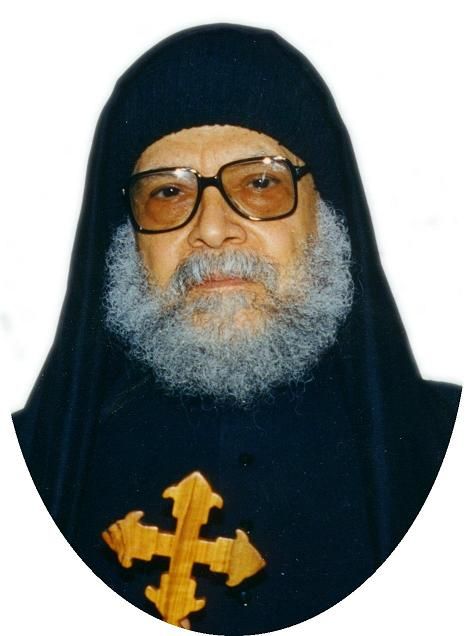
• Metropolitan Mikhail of Asyut

    Metropolitan Mikhail of Asyut

    1920 – 2014

    Biography

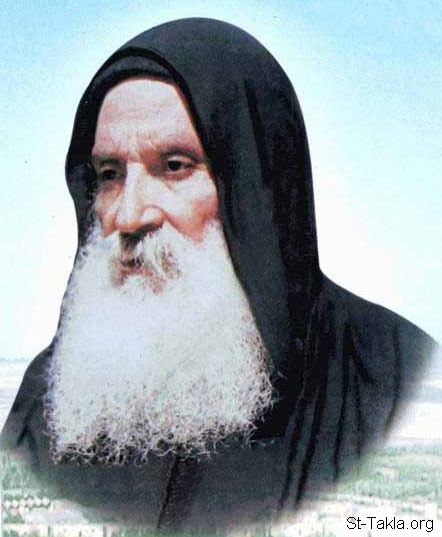
    Anba Mikhail (4 July 1920–23 November 2014) served as Metropolitan of Asyut for over sixty years, from 1946 until his departure in 2014. Born Matyas Hanna in 1920, he became a monk at the monastery of St Macarius in 1939, taking the name Matyas al-Makari. In 1942, he went to the Monastic School at Helwan where he received a two-year Diploma with high distinction.[fn]Joseph Mamdouh, A Biography of the Thrice-Blessed Anba Mikhail, Metropolitan of Assiut and Abbot of the Monastery of St Macarius (Joseph Mamdouh, 2017), 8.[/fn] 

    In 1946, he was expelled from the monastery after calling out his abbot for certain wrong practices, only to be ordained immediately as Metropolitan of Asyut by Pope Yusab II. The previous patriarch, Pope Macarius III, had been the Metropolitan of Asyut, and his death in the previous year had left the seat vacant (at this point, diocesan bishops were still eligible to hold the office of patriarch). As his successor on the patriarchal throne, Pope Yusab needed to find a suitable replacement, and it was rumoured that on the same night that Matyas was expelled from the monastery, St Mary appeared to Pope Yusab and instructed him to go immediately to St Macarius’ monastery and ordain the monk Matyas as the new metropolitan of Asyut.[fn]Monks of St Macarius, “The Departure of His Eminence Metropolitan Mikhail, Metropolitan of Asyut and Abbot of the Monastery of St Macarius (1920–2014).” The Monastery of St Macarius the Great, http://www.stmacariusmonastery.org/ava_michael.htm/, accessed June 28, 2020.[/fn] 

    In addition to managing the Diocese of Asyut through the reigns of four successive patriarchs (Yusab II, Kyrillos VI, Shenouda III and Tawadros II), Metropolitan Mikhail was the Abbot of the Monastery of St Macarius. However, for most of his time in this role, he left the daily management and spiritual leadership of the monastery to Fr Matta al-Miskin.

    Bibliography

    Primary Works (Selected)

    “The Birth of Christ” [Mīlād al-Masīḥ]. Mar Jirjis 1, no. 1 (Jan 1949): 6–7.

    Further Reading

    Mِonks of the Monastery of St Macarius. “The Departure of His Eminence Anba Mikhail, Metropolitan of Asyut and Abbot of the Monastery of St Macarius (1920–2014).” The Monastery of St Macarius the Great, http://www.stmacariusmonastery.org/ava_michael.htm (accessed 30 March 2020).

    Mamdouh, Joseph. A Biography of the Thrice-Blessed Anba Mikhail, Metropolitan of Asyut and Abbot of the Monastery of St Macarius [Qiṣṣa ḥayāt muthallath al-raḥamat al-Ānbā Mīkhā’īl muṭrān Āsyūt wa ra’īs dayr Ābū Maqār] (Joseph Mamdouh, 2017).

    Salama, Victor, Basma William, Nader Shukry, Michael Victor and Mariam Rifaat. “Anba Mikhail (1921–2014).” Watani, 26 November, 2014,  https://en.wataninet.com/coptic-affairs-coptic-affairs/coptic-affairs/anba-mikhail-1921-2014/12542/

  • Fr Matthew the Poor

    Fr Matthew the Poor

    1919 – 2006

    Biography

    Fr Matthew the Poor (20 Sept 1919—8 June 2006) was the spiritual leader of the Monastery of St Macarius and one of the most renowned Coptic ascetics and theologians of the twentieth century. In the words of his abbot, Metropolitan Mikhail of Asyut, Abouna Matta was “a brilliant scholar, a turning point, a new level of writing and literary activity through the long period of his monastic life”.[fn]Met. Mikhail, “Obituary for Fr Matthew the Poor” in Autobiography of Fr Matta al-Maskin, iii.[/fn] As recently as 2013, the scholar Samuel Rubenson could describe Fr Matthew as “by far the most discussed and most influential theologian in Arabic-speaking Christianity today.”[fn]Samuel Rubenson, “Matta El-Meskeen”, 415.[/fn]

    Biography

    By Monks of the Monastery of St Macarius

    He was born Yūsuf Iskandar in Banhā, a town in the Delta, 45km north of Cairo, on September 20, 1919. He graduated with a degree in Pharmacy in 1944 and practiced as a pharmacist until 1948.

    On August 19, 1948, he became a monk in the poorest monastery in Egypt, the Monastery of St Samuel the Confessor in Upper Egypt, taking the name ‘Mattá’ (Matthew). At the Monastery of St Samuel, he started writing his first book, Orthodox Prayer Life.

    He was forced to move to Dayr al-Suryān (Monastery of the Syrians) in Wādī al-Naṭrūn in 1951 where he was ordained a priest. He lived a solitary life, a fair distance from the monastery. After two years, Abba Matta was asked to be the spiritual father of the monastery. At that time he greatly contributed to the revival of the Coptic monastic life. He rediscovered the spirit of the great Fathers of the Desert and became a leading model, having received great grace in matters of fatherhood.

    In 1952 at Dayr al-Suryān, he published his first book in Arabic, Orthodox Prayer Life. The second and expanded edition was published in 1968. Orthodox Prayer Life was later translated into French in 1977, Italian in 1998, English in 2002, German in 2007, Ukrainian in 2011 and Hungarian in 2016.

    In 1954 Pope Yūsāb (Joseph) II, Patriarch of Alexandria, appointed him as patriarchal vicar for Alexandria after elevating hi clerical rank to hegumen. Abba Matta stayed in this position for two years. At the beginning of 1955, he chose to return to the life of stillness in the desert at Dayr al-Suryān. In mid-1956, he left Dayr al-Suryān and returned to the Monastery of St Samuel, seeking greater solitude. He lived as a hermit in the cave of Wādī al-Rayyān ith his disciples from 1960–1969.

    In 1969, Pope Kyrillos VI called Abba Matta and his disciple monks to move to Dayr Anbā Maqār (the Monastery of St Macarius), situated halfway between Cairo and Alexandria in the desert of Wādī al-Naṭrūn. The monks found the fourth century monastery in ruins. Since that time, a great revival within the monastery occurred, both spiritually and architecturally. In 2019, there were 130 monks in addition to great land that surrounds the monastery for agriculture.

    At Dayr Abū Maqār, Abba Matta penned, until his last breath, many different works that cover vast topics such as mystical spirituality, monastic, spiritual books, in addition to historical researches and Biblical commentaries. His books are now translated into 18 languages.
     

    Bibliography

    A. Primary Texts

    Over his long life, Fr Matta wrote a huge number of books and pamphlets; as a rough approximation, the online store of St Macarius’ Monastery lists well over 180 distinct publications (although many of these are short pamphlets of about 20 or 30 pages). If the list were expanded to include his magazine articles, interviews and recorded sermons, the bibliography would swell even further.

    In English, there are at least two comprehensive bibliographies: the first in Fayek M. Ishak’s Spiritual Treasury of Fr Matthew the Poor (Amazon, Coptologia) and the second compiled by the website Spiritualité Orthodoxe (PDF). A number of Fr Matthew’s smaller translated works are available on OrthoKairos.

    • “Interview with His Reverence Fr. Matta Al-Maskin.” (Interview by Fayek M. Ishak) Coptologia 3 (1982): 15–38. (Coptologia III)
    • Communion of Love. Crestwood, NY: St Vladimir’s Seminary Press, 1984. (Amazon)
    • “My Interview with His Reverence Fr. Matta Al-Maskin.” (Interview by Fayek M. Ishak) Coptologia 9 (1988): 25–37. (Coptologia IX)
    • Orthodox Prayer Life: The Interior Way. Crestwood, NY: St Vladimir’s Seminary Press, 2003. (Amazon)
    • The Passion of Jesus Christ in our Life. 3rd edn. St Macarius Monastery, 2008. (PDF)
    • The Titles of Christ. Orthodox Research Institute, 2008. (Amazon
    • Words for Our Time: The Spiritual Words of Matthew the Poor. Translated by James Helmy. Chesterton, IN: Conciliar Press, 2012. (Amazon)
    • Saint Anthony: A Biblical Ascetic. Putty, NSW: St Shenouda Monastery, 2014. (Amazon)
    • Words for Our Lives: The Spiritual Words of Matthew the Poor. Volume 2. Translated by James Helmy. Chesterton, IN: Ancient Faith Publishing, 2016. (Amazon
    • If You Love Me: Serving Christ and the Church in Spirit and Truth. Translated by James Helmy. Chesterton, IN: Ancient Faith Publishing, 2018. (Amazon
    • Sojourners: Monastic Letters and Spiritual Teachings from the Desert. Edited and translated by Monks from the Monastery of St Macarius. Monastery of Saint Macarius the Great, Egypt: St Macarius Press, 2019. (Amazon)

    B. Further Reading

    Davis, Stephen J. “Monastic Revivals.” In Melania: Early Christianity through the Life of One Family, edited by Catherine M. Chin and Caroline T. Schroeder (University of California Press, 2017): 264–7. (On Fr Matta’s treatment of St Melania).

    Davis, Stephen J.  Coptic Christology in Practice (Oxford University Press, 2008): 272–278. (On Fr Matta’s eucharistic theology and controversy with Pope Shenouda III).

    Epiphanius (Bishop). 2018. “The Human and Spiritual Legacy of Fr Matthew the Poor,” Paper presented at Copts in Modernity, St Athanasius Coptic Orthodox Theological College, Melbourne, July 2018. https://epiphaniusmacar.com/the-human-and-spiritual-legacy/. (Web, PDF)

    al-Makari, Basilios. “Fr Matta al-Miskeen.” In The Claremont Coptic Encyclopedia(January 2018). Macmillan/Claremont Graduate University. (PDF)

    Metropolitan Mikhail of Assiut. “Foreword to the Autobiography of Fr Matthew the Poor” in Hegumen Matthew the Poor: The Autobiography. 3rd edn. (Wadi al-Natrun: St Macarius Monastery, 2006): ii–iii.

    Mikhail, Maged S A. “Matta Al-Miskîn.” In The Orthodox Christian World, edited by Augustine Casiday, 359–66. London: Routledge, 2012.

    Rubenson, Samuel. 2013. “Matta El-Meskeen.” In Key Theological Thinkers: From Modern to Postmodern, edited by Staale J. Kristiansen and Svein Rise, 415–25. London: Routledge.

    Rubenson, Samuel. 1997. “Tradition and Renewal in Coptic Theology.” In Between Desert and City: The Coptic Orthodox Church Today, edited by Nelly van Doorn-Harder and Kari Vogt, 35–51. Eugene, OR: Wipf & Stock.

    Watson, John. “Abouna Matta El Meskeen: Contemporary Desert Mystic.” Coptic Church Review 27, nos 3&4 (2006): 66–92. (PDF)

  • Bishop Epiphanius

    Bishop Epiphanius

    1954 – 2018

    Biography

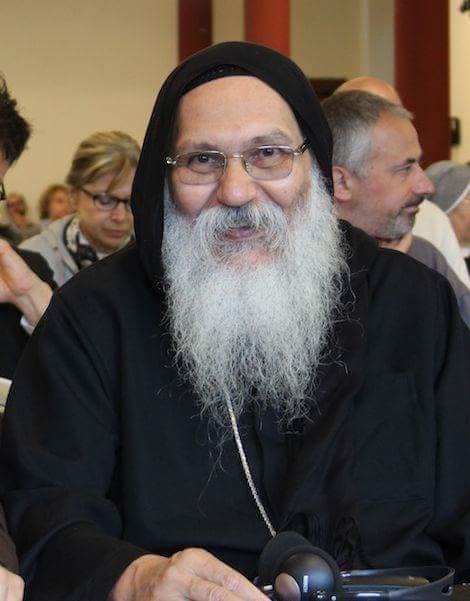
    The late Bishop Epiphanius (1954–2018), Abbot of the Monastery of St Macarius was one of the most beloved and widely-respected Coptic scholars of the 21st century.  Originally a doctor from Tanta, Tadros Zaki Tadros became a monk of the Monastery of St Macarius in 1984 at the age of 29, taking the name Epiphanius al-Makary. As a former doctor, he provided medical care to ill and elderly monks at the monastery, often accompanying them on trips abroad to receive treatment and providing palliative care. His keen intellect and eye for detail caused him to be singled out by the monastery's famous abbot, Fr Matthew the Poor, to work in the monastery's library. At Fr Matthew's command, he was ordained a priest in 2002 (despite his protestations). In 2013, he was elected to succeed Fr Matthew (who had passed away in 2006) as Abbot of the monastery, and was ordained a bishop by Pope Tawadros II: a role he carried out with deep, often confronting, humility (e.g. sitting at the back of churches and lecture halls, and refusing to allow people to make the prostration customary for greeting a Coptic bishop, insisting: "If you prostrate before me, I will prostrate before you!").  Pope Tawadros drew heavily on Bishop Epiphanius' theological learning and his deep monastic experience, appointing him to many delegations and committees, attracting the ire of those who opposed the much debated theological legacy of Fr Matthew the Poor. He was tragically murdered in 2018.

    Bibliography

    Works

    Bishop Epiphanius’ complete Arabic works are listed on EpiphaniusMacar.com under booksarticles and lectures.

    English:
    A collection of essays mostly taken from the collection Mafāhīm Injīliyya has been translated into English as So Great a Salvation: Biblical Meditations of a Contemporary Desert Father (Cairo, Egypt: St Macarius Press, 2019).

    Further Reading

    Lukasik, C. “Modernity, Murder and Coptic Identity.” Public Orthodoxy, August 27, 2018. https://publicorthodoxy.org/2018/08/27/modernity-murder-and-coptic-identity/.

    Rizkalla, R. “Anba Epiphanius the Neo-Hieromartyr.” Orthodoxy in Dialogue, Aug 1, 2018. https://orthodoxyindialogue.com/2018/08/01/anba-epiphanius-the-neo-hieromartyr-by-ramez-rizkalla/.

    Wadid el-Makari. “Preface.” In Bishop Epiphanius. So Great a Salvation: Biblical Meditations of a Contemporary Desert Father. Translated by Samuel Kaldas & Ramza Bassilious. Edited by Markos El-Makari. Cairo, Egypt: St Macarius Press, 2019: 17–33.

    Media

  • This is test periodicals

    Cover Image
    ostrich
    Translations

    Test overview Test overview Test overview Test overview Test overview Test overview Test overview Test overview Test overview Test overview Test overview Test overview Test overview Test overview Test overview Test overview Test overview Test overview Test overview Test overview Test overview Test overview Test overview Test overview Test overview Test overview Test overview Test overview Test overview Test overview Test overview Test overview Test overview Test overview Test overview Test overview Test overview Test overview Test overview Test overview Test overview Test overview Test overview Test overview Test overview Test overview Test overview Test overview Test overview Test overview Test overview Test overview Test overview Test overview Test overview Test overview Test overview Test overview Test overview Test overview Test overview Test overview