• Pope Shenouda III

    Pope Shenouda III

    1923 – 2012

    Biography

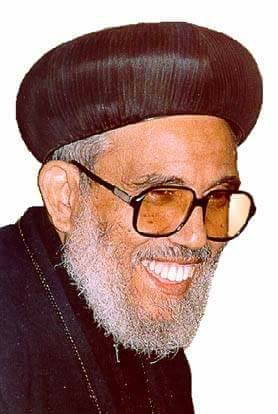
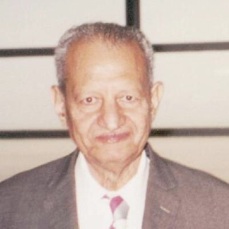
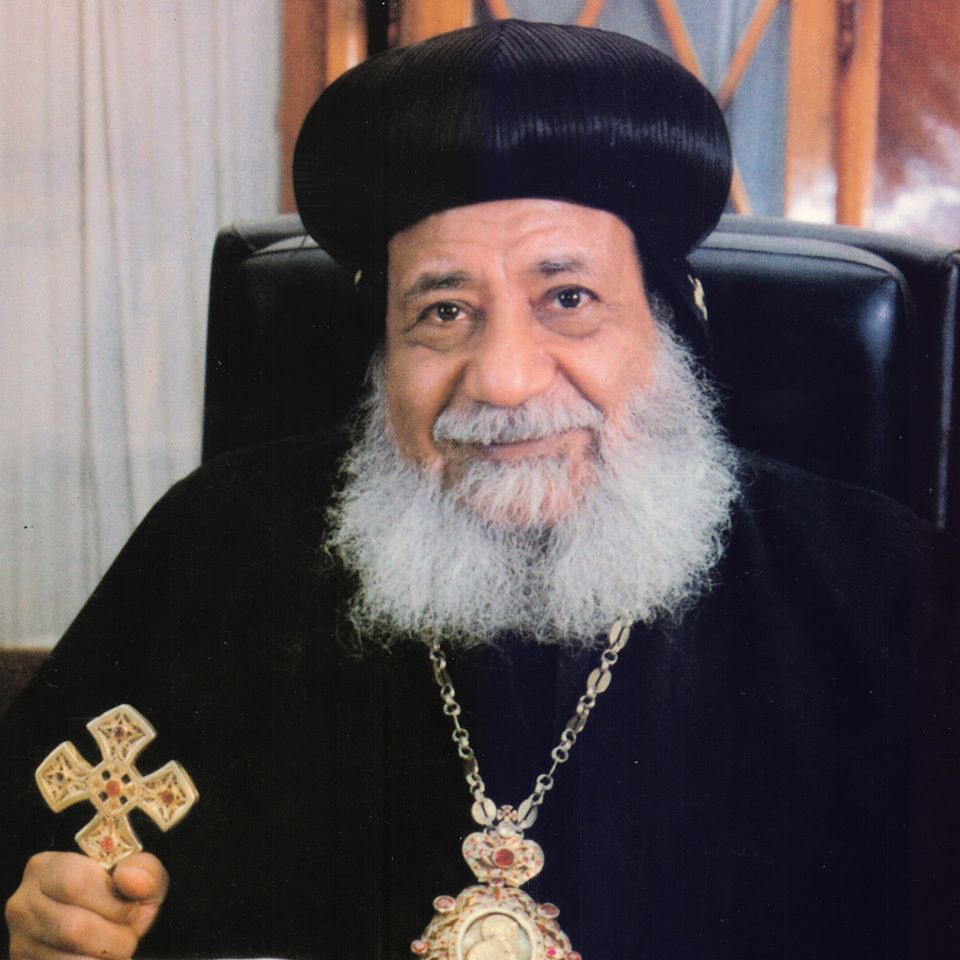
    Pope Shenouda III (1923–2012) was the 117th Pope of the Coptic Orthodox Church. During his papacy he distinguished himself as a prolific writer,  popular preacher and fierce defender of Coptic rights. He remains one of the most influential figures in contemporary Coptic history.

    Available Texts

    Bibliography

    Works

    Pope Shenouda’s literary output is staggeringly large, comprising well over a hundred books of which many were translated into English. He also wrote hundreds of articles in Coptic periodicals (chiefly al-Kiraza, which he founded) and delivered public lectures every week for virtually his entire papacy. A full list of his entire oeuvre would be a significant undertaking. A more realistic goal (and one of potentially greater academic interest) would be a chronological list of the books and articles he published at different stage of his life, i.e. as Nazir Gayyid, Fr Antonios al-Suryani and Bishop Shenouda of Education. This page will be updated as progress is made; if you would like to help, please contact us.

    • In the meantime, see the English works hosted at OrthoKairos and Orthodox eBooks, and the Arabic work hosted at Coptic Treasures.

    Secondary Sources

    Gille, Matthias. 2017. Der koptische Papst Schenuda III: Beobachtungen zu Theologie und Biografie. Anwendungsorientierte Religionswissenschaft, vol. 11. Baden-Baden: Tectum Verlag. (Tectum Verlag)

    Fernandez, Alberto Miguel. 1983. “The Coptic Orthodox Salvation Theology of Anba Shenuda III.” MA Dissertation. University of Arizona. Available online at UA Campus Repository.  (PDF)

    O’Mahony, Anthony. “Tradition at the heart of renewal: the Coptic Orthodox Church and Monasticism in Modern Egypt”, International Journal for the Study of the Christian Church 7, no. 3 (2007), 164–178.

  • Metropolitan Athanasius of Beni Suef

    Metropolitan Athanasius of Beni Suef

    1923 – 2000

    Biography

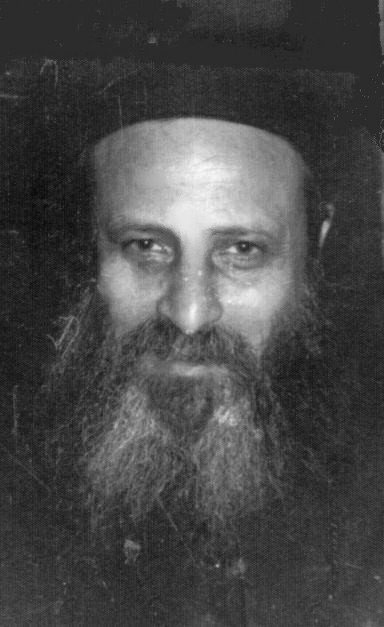
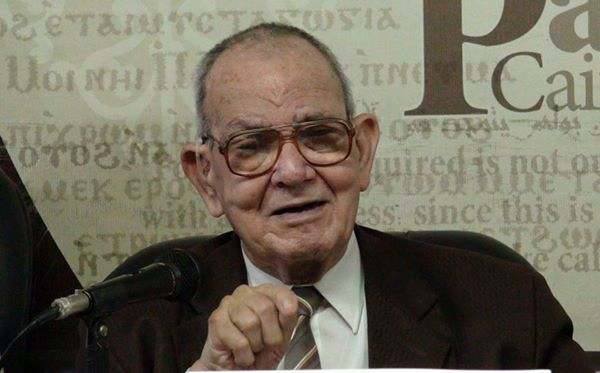
    Metropolitan Athanasius (May 2, 1923– Nov 16, 2000) was the bishop of Beni Suef and Bahnassa in Egypt from 1962 until his departure in 2000. Born Abd al-Masih Bishara, he was a Professor of English Literature before he joined the monastery.[fn]Maged Kamel, “Bishop Athanasius (1919–2000), the Late Bishop of Beni Suef.” ACCOT, 2020.[/fn]

    He is particularly remembered for his work in establishing orders of consecrated women.[fn]See Pieternella van Doorn-Harder, Contemporary Coptic Nuns. Columbia, SC: University of South Carolina Press, 1995.[/fn]

    Bibliography

    Select Bibliography

    Primary Works 

    Books

    • The Gospel of John [Injīl Yūḥannā]. Cairo: Dar al-Jīl li-l-Ṭabā‘a, 1973.
    • Family Guidance in the Church [al-Irshād al-usrī fī-l-kanīsa]. Usqufiyyat al-khadamāt al-‘āmma wa-l-ijtimā‘iyya, 1981.
    • Christ and Humanity [al-Masīḥ wa-l-insāniyya]. al-Abbasiyya: al-Anba Ruweis, 1987.
    • Meditations on the Song of Songs [Ta’āmulāt fī nashīd al-ānshād]. Dar al-Jīl li-l-Ṭabā‘a, 2004.
    • The Unity of the Holy Bible [Wiḥdat al-kitāb al-muqaddas]. Fagala, Egypt: Dar al-Jīl li-l-Ṭabā‘a, no date.
    • The Letter to the Romans [Risālat Rūmiya]. Dār al-yanbū‘ al-thiqāfī, no date.
    • How to Conduct Oneself in a Mixed Society [al-Sulūk al-salīm fī-l-mujtami‘ al-mukhtalaṭ]. Dar al-Jīl li-l-Ṭabā‘a, no date.

    Articles

    • Bishara, Abdelmasih. “Drama Performances in Sunday School” [al-Ḥaflāt al-tamthīliyya bi-madāris al-āḥad], Sunday School Magazine 8, no. 6/7 (Jun 1954): 49–53.
    • Bishara, Abdelmasih. “Solitary Prayer and Family Prayer” [al-Ṣalāt al-fardiyya wal-ṣalāt al-‘ā’iliyya], Sunday School Magazine 11, no. 6 (Aug 1957): 8–9.


    Secondary Literature

    Guirguis, Magdi, and Nelly van Doorn-Harder. The Emergence of the Modern Coptic Papacy. The Popes of Egypt, vol. 3. Cairo, Egypt: American University in Cairo, 2011 (on pages 125, 140, 147, 149, 164, 166–7, 174, 176, 184). (Amazon)

    Hasan, S. S. Christians versus Muslims in Modern Egypt: The Century-Long Struggle for Coptic Equality. Oxford University Press, 2003: 65, 87, 95, 110–11, 114–15, 137–40, 233.

    Kamel, Maged. “Bishop Athanasius (1919–2000), the Late Bishop of Beni Suef.” In Archive of Contemporary Coptic Orthodox Theology. Sydney, NSW: St Cyril’s Coptic Orthodox Theological College, 2020. https://accot.stcyrils.edu.au/bishop-athanasius-maged-kamel/.

  • Fr Bishoy Kamel

    Fr Bishoy Kamel

    1931 – 1971

    Biography

    Saint Bishoy Kamel was a priest of the Church of St George in Sporting, Alexandria, who wrote widely on Scripture, the liturgy and Orthodox spirituality. He was born Sami Kamel in 1931 in Damanhūr. After earning a science degree in 1951, he began to teach high school science at Ramleh Secondary School. At the same time, he continued to study, earning diplomas in Psychology, Education and Philosophy from Alexandria University. In 1957, the university appointed him an associate professor in the Higher Institute of Education.[fn]John H. Watson, “The Transfigured Cross: A Study of Father Bishoi Kamel (6 Dec 1931–21 March 1979),” Coptic Church Review 23, no. 1/2 (2002): 10–12."[/fn] In the same period, he was an energetic servant in the Sunday School movement in Alexandria, and thus combined his broad learning and study with a zealous dedication to ministry. In the words of John Watson:

    The completeness of his mind and the empathy of his nature were evident from his ability to excel in art, education, philosophy, psychology, science and theology. For Sami, all scholarship was related to the quest for an knowledge of God, so that even the simple tasks of study ha larger meaning.[fn]Watson, “The Transfigured Cross,” 11.[/fn]

    After a chance encounter in 1959, Pope Kyrillos VI unexpectedly handpicked Sami to become the priest of a new church being built in Sporting, Alexandria. Despite never having met him before, Kyrillos made the sign of the cross on the young man’s head and said, “God has given us a sign that you are to be a priest. I shall ordain you next Sunday.”[fn]Watson, “The Transfigured Cross,” 14.[/fn] Becoming a celibate priest was not an option, and this meant that Sami — who was single and had no plans for marriage — now had a week to find a wife. Uncertain of what to do, Sami went to consult with his spiritual mentor in Alexandria, Yousef Habib, who counselled him in his uncertainty, and suggested a possible candidate for a quick marriage: Angel Bassili. Habib went straight away to suggest the idea to Angel, and with the Pope’s blessing, the two were quickly married. This remarkable story is recalled by the late Tasoni Angel herself:

    It was about ten o’clock at night when Sami arrived. The marriage must be on the next day because of the Advent Fast. When there are fasts in the Coptic Church, there are no marriages. So we had to arrange everything that night and prepared for the marriage at eight o’clock in the evening on the next day.[fn]Watson, “The Transfigured Cross,” 14.[/fn]

    Sami was then ordained Fr Bishoy Kamel on Wednesday December 2, 1959, and spent his forty day treat in the Syrian Monastery. He was appointed as parish priest of the Church of St George in Sporting, Alexandria.

    In the early 1970s, Pope Kyrillos sent Fr Bishoy and Fr Tadros Malaty to serve for some time in America (Los Angeles).[fn]Magdi Guirguis & Nelly van Doorn-Harder, The Emergence of the Modern Coptic Papacy (Cairo, Egypt: American University in Cairo Press, 2011), 181.[/fn] As might be expected, Fr Bishoy quickly became a prolific writer and preacher, and is considered by many Copts as a contemporary saint. He was also a keen and often controversial contributor to church affairs. For instance, he was outspokenly opposed to the possibility of bishops (general or diocesan) becoming Patriarch, as he argued in a controversial pamphlet titled Ecclesiastical Teachings; a position which strained his otherwise friendly relationship with Pope Shenouda III (who had been a general bishop before becoming Pope).[fn]On the tensions between Pope Shenouda and Fr Bishoy, see Watson, “The Transfigured Cross,” 35–36.[/fn] Fr Bishoy was also a lifelong friend and supporter of Fr Matthew the Poor, and insisted on meeting and learning from him even during the period of Fr Matthew’s strained relationship with Pope Kyrillos[fn]Fr Tadros Malaty, General Servants’ Meeting, July 17, 2019[/fn]. When St Macarius’ Monastery began publishing St Mark Magazine (Majallat Murqus) for youth and servants, Fr Bishoy was a regular contributor. In 1976 he was diagnosed with cancer, and after three years of struggling with the illness, he departed peacefully on March 21, 1979. His fellow priest Fr Tadros Malaty recalls that the days of his illness, even when he was on his sickbed, were some of the most effective in his entire service, even though Fr Bishoy himself did not perceive it: “God had hidden from [Fr Bishoy’s] eyes the power of his service during his sickness. Many people found comfort in their sickness or by troubles merely seeing [him] in pain or hearing about his patience and joy!”[fn]Fr Tadros Malaty, Pastoral Work in the Life of Fr Pishoy Kamel, (trans. & rev.) H. Doss, M. Youssef, I. Ibrahim and N. El-Agamy (Santa Monica, CA: St Peter & St Paul’s Coptic Orthodox Church, 1995), 13.[/fn]. On June 9, 2022, Fr Bishoy Kamel was recognised as a saint by the Holy Synod, along with Fr Yustus al-Antoni.[fn]General Session of the Holy Synod, 9 June 2022, https://copticorthodox.church/en/2022/06/09/general-session-of-the-holy-synod-2022/[/fn]
    Bibliography

    Fr Bishoy’s written legacy is very large, and a complete bibliography has yet to be compiled. This list is only partial. If you are interested in helping to compile a complete bibliography, please contact us.

    In English Translation

    • Great Lent and Me. Trans. Yvonne Tadros (Putty, NSW: St Shenouda Press, 2018). (Amazon)
    • Resurrection and Me. Trans. Yvonne Tadros (Putty, NSW: St Shenouda Press, 2019). (Amazon)

    In Arabic

    • Augustine's Commentary on the Sermon on the Mount [Āghusṭīnūs fī sharḥ al-maw‘iẓa ‘alā-l-jabal]. Karnak Press, 1962. (PDF)
    • Saint Demiana [al-Qiddīsa Dimȳāna]. Al-Ibrāhīmīyya, Alexandria: Library of St George's Church, Sporting/Karnak Press, 1982. (PDF)
    • The Sacrifice of Our Faith [Ḍabīḥat īmānnā]. Al ‘abbasiyya: Anba Ruweiss, 1985. (PDF)
    • How can we live the resurrection? [Kaīfa nu‘īsh al-qīyāma?]. 3rd edn. Al-Ibrāhīmīyya, Alexandria: Library of St George's Church, Sporting, 1989. (PDF)
    • Illuminating and Living Sermons [‘iẓāt muḍī’a wa mu‘āsha], 7 vols. Al ‘abbasiyya: Anba Ruweiss, 2004. (PDF)

    Further Reading

    Khalil, Elhamy. The Story of the Service of Saint Abouna Pishoy Kamel in Los Angeles. St Mary Coptic Orthodox Church of Chicago, 2023.

    Malaty, Tadros Y. Pastoral Work in the Life of Fr Pishoy Kamel. Translated and revised by Howayda Doss, Michelle Youssef, Irene Ibrahim and Nora El-Agamy. Santa Monica, CA: St Peter & St Paul’s Coptic Orthodox Church, 1995. (PDF)

    Watson, John H. "The Transfigured Cross: A Study of Fr Bishoy Kamel (6 December 1931–21 March 1979)Coptic Church Review 23, nos. 1 & 2 (2002). (PDF)

  • Fr Matthew the Poor

    Fr Matthew the Poor

    1919 – 2006

    Biography

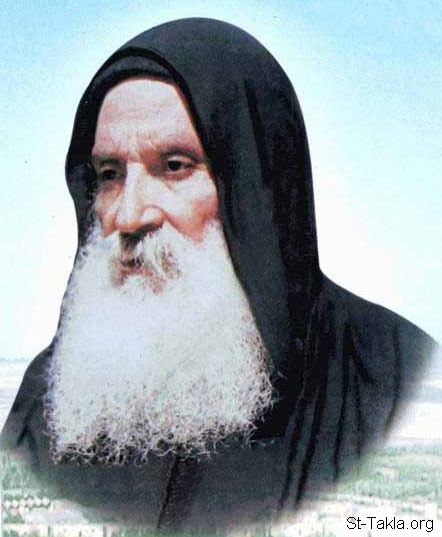
    Fr Matthew the Poor (20 Sept 1919—8 June 2006) was the spiritual leader of the Monastery of St Macarius and one of the most renowned Coptic ascetics and theologians of the twentieth century. In the words of his abbot, Metropolitan Mikhail of Asyut, Abouna Matta was “a brilliant scholar, a turning point, a new level of writing and literary activity through the long period of his monastic life”.[fn]Met. Mikhail, “Obituary for Fr Matthew the Poor” in Autobiography of Fr Matta al-Maskin, iii.[/fn] As recently as 2013, the scholar Samuel Rubenson could describe Fr Matthew as “by far the most discussed and most influential theologian in Arabic-speaking Christianity today.”[fn]Samuel Rubenson, “Matta El-Meskeen”, 415.[/fn]

    Biography

    By Monks of the Monastery of St Macarius

    He was born Yūsuf Iskandar in Banhā, a town in the Delta, 45km north of Cairo, on September 20, 1919. He graduated with a degree in Pharmacy in 1944 and practiced as a pharmacist until 1948.

    On August 19, 1948, he became a monk in the poorest monastery in Egypt, the Monastery of St Samuel the Confessor in Upper Egypt, taking the name ‘Mattá’ (Matthew). At the Monastery of St Samuel, he started writing his first book, Orthodox Prayer Life.

    He was forced to move to Dayr al-Suryān (Monastery of the Syrians) in Wādī al-Naṭrūn in 1951 where he was ordained a priest. He lived a solitary life, a fair distance from the monastery. After two years, Abba Matta was asked to be the spiritual father of the monastery. At that time he greatly contributed to the revival of the Coptic monastic life. He rediscovered the spirit of the great Fathers of the Desert and became a leading model, having received great grace in matters of fatherhood.

    In 1952 at Dayr al-Suryān, he published his first book in Arabic, Orthodox Prayer Life. The second and expanded edition was published in 1968. Orthodox Prayer Life was later translated into French in 1977, Italian in 1998, English in 2002, German in 2007, Ukrainian in 2011 and Hungarian in 2016.

    In 1954 Pope Yūsāb (Joseph) II, Patriarch of Alexandria, appointed him as patriarchal vicar for Alexandria after elevating hi clerical rank to hegumen. Abba Matta stayed in this position for two years. At the beginning of 1955, he chose to return to the life of stillness in the desert at Dayr al-Suryān. In mid-1956, he left Dayr al-Suryān and returned to the Monastery of St Samuel, seeking greater solitude. He lived as a hermit in the cave of Wādī al-Rayyān ith his disciples from 1960–1969.

    In 1969, Pope Kyrillos VI called Abba Matta and his disciple monks to move to Dayr Anbā Maqār (the Monastery of St Macarius), situated halfway between Cairo and Alexandria in the desert of Wādī al-Naṭrūn. The monks found the fourth century monastery in ruins. Since that time, a great revival within the monastery occurred, both spiritually and architecturally. In 2019, there were 130 monks in addition to great land that surrounds the monastery for agriculture.

    At Dayr Abū Maqār, Abba Matta penned, until his last breath, many different works that cover vast topics such as mystical spirituality, monastic, spiritual books, in addition to historical researches and Biblical commentaries. His books are now translated into 18 languages.
     

    Bibliography

    A. Primary Texts

    Over his long life, Fr Matta wrote a huge number of books and pamphlets; as a rough approximation, the online store of St Macarius’ Monastery lists well over 180 distinct publications (although many of these are short pamphlets of about 20 or 30 pages). If the list were expanded to include his magazine articles, interviews and recorded sermons, the bibliography would swell even further.

    In English, there are at least two comprehensive bibliographies: the first in Fayek M. Ishak’s Spiritual Treasury of Fr Matthew the Poor (Amazon, Coptologia) and the second compiled by the website Spiritualité Orthodoxe (PDF). A number of Fr Matthew’s smaller translated works are available on OrthoKairos.

    • “Interview with His Reverence Fr. Matta Al-Maskin.” (Interview by Fayek M. Ishak) Coptologia 3 (1982): 15–38. (Coptologia III)
    • Communion of Love. Crestwood, NY: St Vladimir’s Seminary Press, 1984. (Amazon)
    • “My Interview with His Reverence Fr. Matta Al-Maskin.” (Interview by Fayek M. Ishak) Coptologia 9 (1988): 25–37. (Coptologia IX)
    • Orthodox Prayer Life: The Interior Way. Crestwood, NY: St Vladimir’s Seminary Press, 2003. (Amazon)
    • The Passion of Jesus Christ in our Life. 3rd edn. St Macarius Monastery, 2008. (PDF)
    • The Titles of Christ. Orthodox Research Institute, 2008. (Amazon
    • Words for Our Time: The Spiritual Words of Matthew the Poor. Translated by James Helmy. Chesterton, IN: Conciliar Press, 2012. (Amazon)
    • Saint Anthony: A Biblical Ascetic. Putty, NSW: St Shenouda Monastery, 2014. (Amazon)
    • Words for Our Lives: The Spiritual Words of Matthew the Poor. Volume 2. Translated by James Helmy. Chesterton, IN: Ancient Faith Publishing, 2016. (Amazon
    • If You Love Me: Serving Christ and the Church in Spirit and Truth. Translated by James Helmy. Chesterton, IN: Ancient Faith Publishing, 2018. (Amazon
    • Sojourners: Monastic Letters and Spiritual Teachings from the Desert. Edited and translated by Monks from the Monastery of St Macarius. Monastery of Saint Macarius the Great, Egypt: St Macarius Press, 2019. (Amazon)

    B. Further Reading

    Davis, Stephen J. “Monastic Revivals.” In Melania: Early Christianity through the Life of One Family, edited by Catherine M. Chin and Caroline T. Schroeder (University of California Press, 2017): 264–7. (On Fr Matta’s treatment of St Melania).

    Davis, Stephen J.  Coptic Christology in Practice (Oxford University Press, 2008): 272–278. (On Fr Matta’s eucharistic theology and controversy with Pope Shenouda III).

    Epiphanius (Bishop). 2018. “The Human and Spiritual Legacy of Fr Matthew the Poor,” Paper presented at Copts in Modernity, St Athanasius Coptic Orthodox Theological College, Melbourne, July 2018. https://epiphaniusmacar.com/the-human-and-spiritual-legacy/. (Web, PDF)

    al-Makari, Basilios. “Fr Matta al-Miskeen.” In The Claremont Coptic Encyclopedia(January 2018). Macmillan/Claremont Graduate University. (PDF)

    Metropolitan Mikhail of Assiut. “Foreword to the Autobiography of Fr Matthew the Poor” in Hegumen Matthew the Poor: The Autobiography. 3rd edn. (Wadi al-Natrun: St Macarius Monastery, 2006): ii–iii.

    Mikhail, Maged S A. “Matta Al-Miskîn.” In The Orthodox Christian World, edited by Augustine Casiday, 359–66. London: Routledge, 2012.

    Rubenson, Samuel. 2013. “Matta El-Meskeen.” In Key Theological Thinkers: From Modern to Postmodern, edited by Staale J. Kristiansen and Svein Rise, 415–25. London: Routledge.

    Rubenson, Samuel. 1997. “Tradition and Renewal in Coptic Theology.” In Between Desert and City: The Coptic Orthodox Church Today, edited by Nelly van Doorn-Harder and Kari Vogt, 35–51. Eugene, OR: Wipf & Stock.

    Watson, John. “Abouna Matta El Meskeen: Contemporary Desert Mystic.” Coptic Church Review 27, nos 3&4 (2006): 66–92. (PDF)

  • Habib Girgis

    Habib Girgis

    1876 – 1951

    Biography

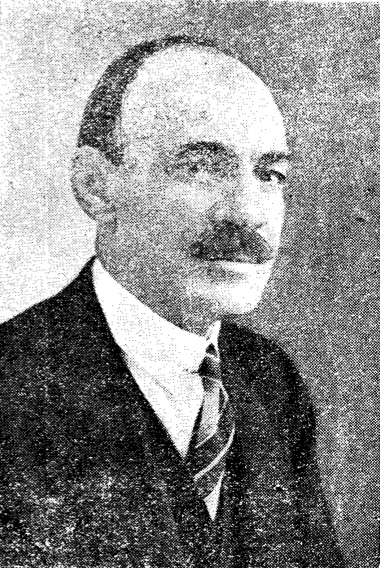
    St. Habib Girgis (1876–1951) was the founder of the Sunday School Movement that initiated sweeping educational and theological reforms in the Coptic Church in the late 19th and early twentieth centuries. For much of his ministry, he was supported by Pope Kyrillos V. In 2012 he was canonised as a saint of the Coptic Church, along with Pope Kyrillos VI.

    Available Texts

    Bibliography

    A. Works

    A comprehensive bibliography of Habib Girgis’ works can be found in Bishop Suriel, Habib Girgis: Coptic Orthodox Educator and a Light in the Darkness (Crestwood, NY: SVS Press, 2017): 264–67.

    B. Further Reading

    Jayson, Casper. “How Sunday School Sparked Revival in Egypt’s Oldest Church” Christianity Today, June 19, 2018, https://www.christianitytoday.com/history/2018/june/habib-girgis-coptic-revival-sunday-school-movement.html.

    Nasim, Sulayman. 1991. “Habib Jirjis”, in Claremont Coptic Encyclopedia, vol. 4. Macmillan/Claremont Graduate University, School of Religion, 1189a–1189b.

    Shenouda III (Pope). “Our Teacher Archdeacon Habib Girgis”. Translated by S. M. Saad. Watani, August 22, 2013, http://en.wataninet.com/coptic-affairs-coptic-affairs/religious/st-habib-girgis/1440/.

    Suriel (Bishop). Habib Girgis: Coptic Orthodox Educator and a Light in the Darkness. Crestwood, NY: St. Vladamir’s Seminary Press, 2017. (Amazon)

    Yanney, Rodolph. “Light in the Darkness: Life of Archdeacon Habib Girgis (1876–1951).” Coptic Church Review 5, no. 2 (1984): 47–52.

  • Dr Rodolph Yanney

    Dr Rodolph Yanney

    1930 – 2010

    Biography

    Dr Rodolph Yanney (1930–2010) was an émigré Coptologist and scholar, and the founding editor of the prestigious Coptic Church Review.[fn]Yanney, Andrew. “Dr Rodolph M. Yanney.” Coptic Church Review, https://www.copticchurchreview.com/#author/.[/fn]

    Bibliography

    Writings

    Dr Yanney frequently wrote articles in both Arabic and English for the two periodicals he published: the Coptic Church Review and al-Resalah. The Coptic Church Review has kindly granted ACCOT permission to incorporate full PDFs of Dr Yanney’s articles into the site’s database of theological texts (see above). 

    Further Reading

    Yanney, Andrew. “Dr Rodolph M. Yanney.” Coptic Church Review, https://www.copticchurchreview.com/#author/.

  • Bishop Gregorius

    Bishop Gregorius

    1919 – 2001

    Biography

    Bishop Gregorius (Oct 13, 1919–Oct 22, 2001) was the first and only General Bishop for Higher Theological Studies, Coptic Culture and Scientific Research. He was born Wahib ‘Atalla Girgis in Aswan in 1919. He received a Bachelor's degree from the Clerical College (May 1939). He continued to study the humanities at the University of Cairo, earning a Licenciate in Philosophy (July 1944) and a Diploma of Egyptian Antiquities (June 1951). Finally, he undertook a PhD in Egyptology and Coptic Studies at the University of Manchester in the United Kingdom (1952–1955) with a thesis entitled “Greek Words in Coptic Usage”. His broad learning in the humanities is on display in his early contributions to the Sunday School Magazine. He became a monk of Dayr al-Muharraq in 1962, becoming Bakhoum al-Muharraqi. Pope Kyrillos VI ordained him General Bishop for Higher Theological Studies, Coptic Culture and Scientific Research in 1967.

    Bibliography

    Works

    Bishop Gregorius’ written legacy is enormous, on a par with those of Pope Shenouda III and Fr Matta al-Miskin. If you can supply any works that are missing, especially letters or voice recordings, please contact us. A bibliography is currently being compiled and will be uploaded soon.

    The most important collection of Bishop Gregorius’ written works, including previously unpublished primary sources, is Monier Ateya’s Mawsū‘at al-Anba Ghrīghūryūs, most of which can be downloaded here or on Coptic Treasures.

    Further Reading

    Casey, John. After Lives: A Guide to Heaven, Hell, and Purgatory, Oxford University Press, 2009 (on pages 369–399).

    Guirguis, M. & van Doorn-Harder, N. The Emergence of the Modern Coptic Papacy. The Popes of Egypt: A History of the Coptic Church and Its Patriarchs, Volume 3. Cairo: American University in Cairo Press, 2011.

    Hasan, S. S. Christians versus Muslims in Modern Egypt: The Century-Long Struggle for Coptic Equality, Oxford University Press, 2003 (pages 86, 88, 89, 111, 159, 205, 226–27, 246).


  • Noshy Abdelshahid

    Noshy Abdelshahid

    1931 – 2022

    Biography

    Dr Noshy Abdelshahid (September 28, 1931–July 9, 2022) was a consecrated servant and the founder and director of the Centre for Patristic Studies in Cairo in 1978.[fn]Samuel Tadros, Motherland Lost: The Egyptian Quest for Modernity (Stanford, CA: Hoover Institution Press, 2013): 179.[/fn] He was also a prolific translator, having produced numerous translations of patristic texts from their original languages into Arabic, as well as works of modern Orthodox theologians such as Metropolitan Kallistos Ware. After his departure in July 2022, Pope Tawadros II released the following public letter of condolence to the Coptic Church:

    Unto the hope of the resurrection we commit Dr Noshy Abdelshahid: a faithful servant, a patristic teacher, a self-sacrificing consecrated servant (mukarras), a powerful author whose many books and translations, which are rich, spiritual and patristic resources, have enriched Coptic libraries. 

    He was a father to many who were discipled by him in service of the Church. He encouraged them to read, research and study, and opened to them fields of rich Scriptural and authentic patristic understanding.

    Truly, this is a great loss both academically and spiritually in the life of our Coptic Orthodox Church. We bid him farewell as one of great stature in the Church, who was strongly connected to most of the fathers of our Church. We ask him to pray on our behalf, that Christ might bring our journey and our service to completion for the sake of His Holy Name.[fn]Statement on the Departure of Dr Noshy Abdelshahid, July 9 2022, Coptic Media Center [al-Markaz al-I‘lāmy al-Qibṭy al-Urthudhuksy], Facebook.com, https://www.facebook.com/CopticSP/posts/411256357713025.[/fn]

    Bibliography

    Works

    Articles

    “The Syrian Orthodox Church” [al-Kanīsa al-urthudhuksiyya al-Suryaniyya]. Sunday School Magazine 13, no. 2 (February 1959), 36–38.

    “He Has Come and Will Come” [Atā wa-saya’tī]. Majallat Murqus 14, no. 146 (January 1973), 20–22.

    “Youth Questions” [As’ilat al-shabāb]. Majallat Murqus 14, no. 148 (March 1973), 24–26.

    “The Baptism of the Cross” [Ma‘mūdiyyat al-ṣalīb]. Majallat Murqus 14, no. 149 (April 1973), 16–18, 15.

    Books

    Christ: Priest and Intercessor. The Ascension of Christ and His Priesthood [al-Masīḥ al-kāhin wa-l-shafī‘. Ṣu‘ūd al-Masīḥ wa kahanūt-hu]. al-Markaz al-masry li-l-tab‘a, 1978. 2nd edn, 1997.

    Further Reading

    Tadros, Samuel. Motherland Lost: The Egyptian Quest for Modernity. Stanford, CA: Hoover Institution Press, 2013 (on page 179). (Amazon)